
Commercial Building Conversions in Brecon: When to Refurbish, Reconfigure or Restore Your Premises

If you are researching commercial building conversions in Brecon, the real decision is not simply whether to carry out building work. It is which type of work will improve the premises in the most practical and cost-effective way. Some properties need a straightforward refurbishment. Others need a full internal reconfiguration to suit a different layout, team or workflow. Older buildings may need careful restoration so they can perform better without losing the character that makes them valuable in the first place.
At J L Stephens Ltd, we provide commercial building services in Brecon from our base in Talybont-on-Usk. Established in 1948, we work on conversions, refurbishments, restoration projects and industrial building maintenance, helping commercial clients make informed decisions before work begins.
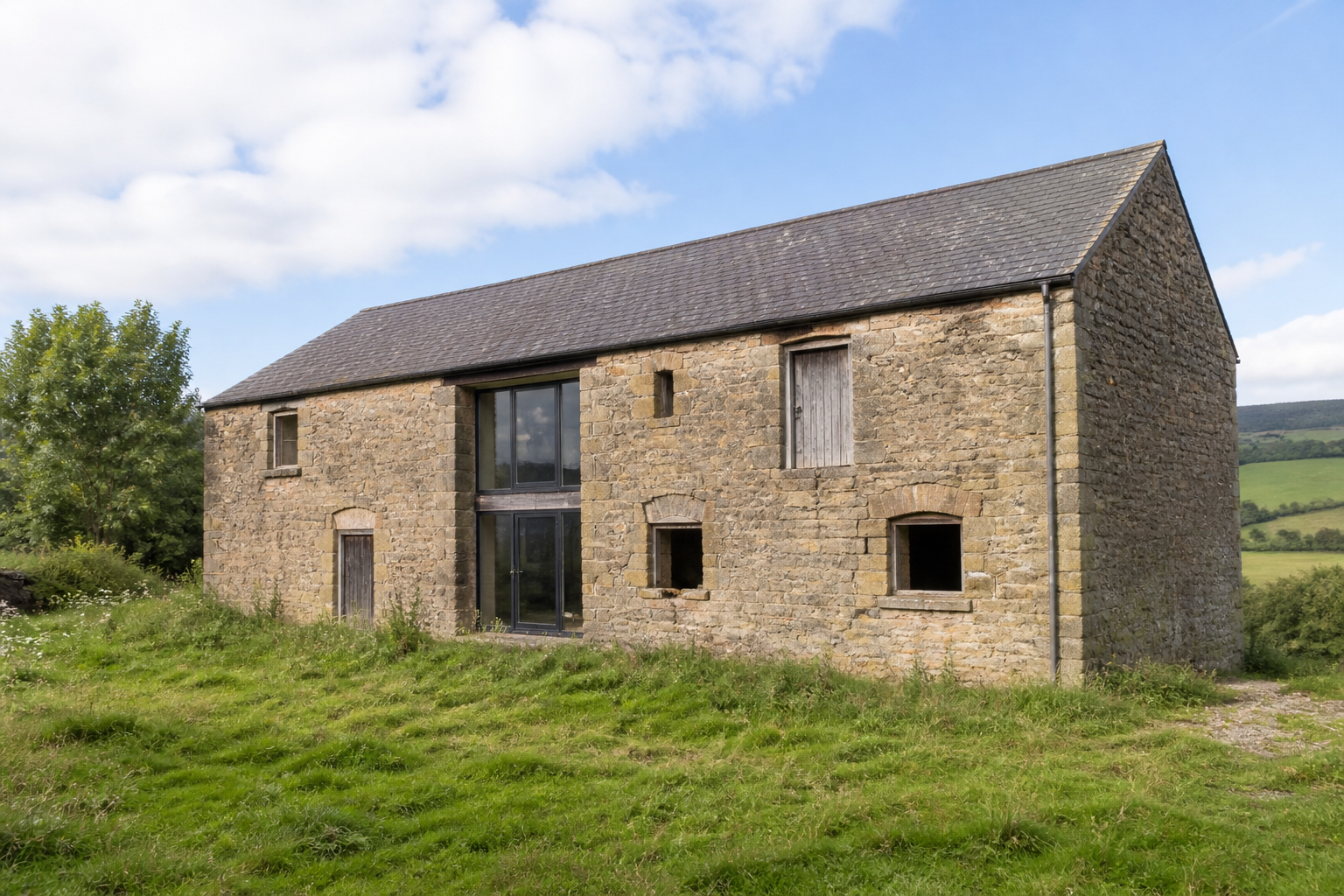
What commercial building conversions in Brecon can involve
Refurbishment, reconfiguration and restoration are not the same thing
These terms are often used interchangeably, but they solve different problems.
Refurbishment usually focuses on improving the condition, appearance and performance of the existing space.
Reconfiguration involves changing the layout so the premises works better for how the business operates.
Restoration is a more careful approach, often needed for older or character buildings where important original features or fabric need to be retained and repaired properly.
Choosing the right route matters because it affects budget, timescale, disruption and the long-term value of the property. A premises that only needs updating should not be overcomplicated. Equally, a layout that no longer works should not be treated as a cosmetic problem.
When refurbishment is the right choice
Choose refurbishment when the building basically works but feels tired, dated or inefficient
Refurbishment is often the right answer when the structure and general layout are sound, but the premises no longer reflects the standard your business needs. This can apply to offices, workshops and other commercial spaces that need a fresh, more practical finish rather than a full redesign.
A well-planned refurbishment can improve first impressions, usability and day-to-day comfort without changing the fundamental arrangement of the building. It can also be a sensible route when you want improvement with less upheaval than major structural alteration.
Signs a refurbishment may be enough
The internal layout still suits your staff, storage and operations.
Finishes are worn, damaged or dated.
Reception, office or welfare areas no longer present the right image.
You need repairs and upgrades rather than a new spatial plan.
You want to improve the premises while keeping disruption more controlled.
In many cases, refurbishment is about making the best use of what is already there. That can include repair work, updated finishes, better flow between existing areas and improvements that help the building feel more fit for purpose.
If you are reviewing older premises, a builder with experience in building refurbishments and conversions can help you distinguish between work that is essential and work that is optional.
When reconfiguration makes more sense
Layout problems can hold a business back even when the building looks acceptable
Some commercial premises are not in poor condition at all. The problem is that the space no longer supports the way the business needs to function. Teams change, working patterns change and customer-facing spaces often need to evolve. When that happens, reconfiguration can be more valuable than a simple cosmetic upgrade.
Reconfiguration is often the right choice when you need to alter how different parts of the building relate to each other. That might mean changing circulation routes, opening up some areas, separating others or improving the relationship between work, storage and access spaces.
Common reasons to reconfigure a commercial property
Create a more practical office layout.
Improve staff facilities and back-of-house areas.
Make better use of underused rooms or floor space.
Adapt the premises for a new business use or a change in operations.
Improve access, movement and day-to-day efficiency.
Separate public and operational areas more clearly.
The value of reconfiguration is that it addresses function, not just appearance. A smarter layout can improve productivity, customer experience and overall usability without the need to relocate.
Questions to answer before reconfiguring
How does the building need to work in practice? Think about staff movement, deliveries, storage, privacy, access and safety.
What is no longer working in the current layout? Be specific. Bottlenecks, awkward rooms and wasted space usually point to the real issue.
Will the building need to support future growth? It is often better to plan for flexibility now than to repeat the process too soon.
Can the work be phased? If the premises is active, sequencing can be just as important as the design itself.
For many business owners, this is where practical experience matters most. Good reconfiguration is not about change for its own sake. It is about making the premises support the business more effectively.
When restoration is the right route
Older and character premises need a careful balance between repair and modern use
Restoration is usually the right approach when a commercial building has age, character or historic detail that should be respected rather than stripped away. In these cases, the goal is not simply to make the premises look newer. It is to preserve what matters while improving how the building performs and how it can be used.
This can be especially important with older commercial properties, properties with traditional materials or premises where inappropriate past alterations have affected the look or function of the building.
What restoration may involve
Careful repair of existing building fabric.
Sensitive replacement of damaged materials where necessary.
Improving usability without erasing original character.
Combining repair work with refurbishment or conversion elements.
Taking a measured approach where planning or heritage considerations may apply.
J L Stephens Ltd provides commercial building restoration and restoration of listed buildings, so we understand that older premises often need a different mindset from standard modern building work. The right solution is usually one that respects the building while still making it practical for current use.
Depending on the building and the scope of the project, planning permission, listed building consent or building regulations approval may be required. That is why an early review of the property is so important before deciding how far the work should go.
Key factors to review before any commercial project
The best option usually becomes clearer when you assess the whole building, not just one problem
Before deciding whether to refurbish, reconfigure or restore, it helps to step back and assess the premises properly. The right answer is rarely based on one issue alone.
Condition: Are the main problems cosmetic, structural or operational?
Layout: Does the current arrangement help or hinder the way the business runs?
Age and character: Does the building need a more sensitive approach?
Disruption: Can the work be phased around business activity?
Compliance: Will changes affect approvals, access, services or safety requirements?
Long-term value: Which option gives the premises the best useful life for the investment made?
These points often prevent expensive missteps. For example, a business may start by planning a decorative refresh only to realise the layout is the real issue. Another may assume major alteration is needed when a well-targeted refurbishment would achieve the result with less disruption.
That is why we encourage clients to start with practical advice, a clear site assessment and realistic priorities rather than rushing straight into a specification.
Why commercial clients choose J L Stephens Ltd
A practical, experienced approach from a long-established local builder
When you are investing in your premises, you need more than general building capability. You need a contractor that can look at the property in context and recommend a route that fits the building, the use and the budget.
J L Stephens Ltd offers commercial conversions, refurbishments, restoration work and industrial building maintenance from Talybont-on-Usk, Brecon. We have been established since 1948 and provide free quotations and professional advice.
Established in 1948
Commercial and domestic building services
Commercial building conversions and restoration
Building refurbishments and industrial building maintenance
Restoration of listed buildings
Federation of Master Builders member
NHBC member
Constructionline accredited
Acclaim through Safety Schemes in Procurement
If you want a contractor that can take a measured view of the building rather than pushing a one-size-fits-all answer, you can find out more about our commercial and restoration building work on our website.
FAQs about commercial building conversions in Brecon
What is the difference between commercial refurbishment and commercial building conversion?
A refurbishment usually improves the condition, finish and usability of the existing premises without fundamentally changing its role. A commercial building conversion is often broader and may include layout changes, structural work or adapting the property for a different type of use.
How do I know whether my premises should be reconfigured or simply updated?
If the main issue is appearance, wear or outdated finishes, refurbishment may be enough. If staff flow, access, storage, room use or customer movement are causing problems, reconfiguration is more likely to deliver the better result.
Can older commercial buildings be restored and modernised at the same time?
Yes, in many cases they can. The key is to balance repair and modern function carefully. Older properties often benefit from sensitive restoration combined with selected improvements, rather than heavy-handed alteration.
Will commercial building work always mean major disruption to the business?
Not always. The level of disruption depends on the type of building, the scope of work and whether the project can be phased. Early planning helps identify how work may be organised as practically as possible.
Do J L Stephens Ltd offer quotes for commercial building conversions in Brecon?
Yes. We provide free quotations and professional advice for commercial building work, including conversions, refurbishments, restoration and related projects.
Conclusion
The best commercial improvement projects start with the right diagnosis. If the layout works, refurbishment may be the sensible route. If the building is holding the business back, reconfiguration can unlock far more value. If the premises is older or more sensitive, restoration may be the right foundation for everything else.
If you need to improve or reconfigure your commercial property in Brecon, speak to J L Stephens Ltd for practical guidance and a free quote. Visit our website to discuss your project and take the next step with an experienced local builder.
Comments